You Control the Temperature. But What's In Your Air?
Colorado's wildfires, high altitude, and dry winters make indoor air quality a real concern along the Front Range.
We measure what's actually in your air — and give you a full report.
Schedule an Air Quality Assessment:
 Bad air doesn't always announce itself.
Does this sound familiar?
We test for 10 things most people never knew could be affecting their health — and explain each one.
Here's what's included in every assessment:
- Carbon Monoxide (CO)
- An odorless gas from furnaces and gas appliances. Can be dangerous at elevated levels.
- Total Volatile Organic Compounds (TVOC)
- Gases off-gassed by paints, cleaning products, and furniture. The "new home smell" is actually this.
- Carbon Dioxide (CO2)
- A byproduct of breathing. High levels mean poor ventilation — and explain why a crowded room makes you feel foggy.
- Formaldehyde (HCHO)
- A specific VOC common in new flooring and pressed wood. A known carcinogen at high concentrations.
- Nitrogen Oxides (NOx)
- Produced by gas stoves and furnaces. Irritates the lungs, especially for kids and anyone with asthma.
- Humidity
- Too low causes dry air and static; too high feeds mold and dust mites. The sweet spot is 30–50%.
- Particulate Matter (PM1, PM2.5, PM10)
- Microscopic particles from dust, smoke, and cooking. The EPA's standard measure for air quality — and the stuff most filtration systems are designed to catch.
- Temperature
- Room-by-room readings. Uneven temps can point to HVAC performance issues before they become breakdowns.
*This assessment provides a time-specific snapshot of the indicators measured by our equipment. It is not a mold, radon, asbestos, or medical diagnostic test, and it does not replace certified smoke or carbon-monoxide alarms.
Here's what's included in every assessment:
No guesswork. No jargon. Just a clear picture of what's in your air.
 1. We Schedule Around You
- Most assessments take 90 minutes to 2 hours. We'll pick a time that works and tell you what to expect.
 2. Thorough Calculations
- We set up high-accuracy sensors and monitor for 20 minutes in each location under test. No shortcuts.
 3. We Measure 10 Indicators
- CO, CO2, NOx, PM1, PM2.5, PM10, TVOCs, formaldehyde, temperature, and humidity — all logged per room.
- 4. You Get a Full Written Report
- Raw data plus plain-English analysis: what's in range, what's not, and what it means for your household.
 5. A Personal Results Walkthrough
- When your report is ready, we schedule a call to walk through the results with you personally. You'll know what every number means before we hang up.
 6. You Decide What's Next
- No pressure. Some results need action, and sometimes the fix is as simple as adding a small humidifier or a fan. We won't upsell you into something you don't need.
Already considering duct cleaning?
The Breathe Easy Bundle offers discount options for booking both IAQ testing and duct cleaning services.
See exactly what you'll receive:
Every customer gets a full written report — not a vague summary, but actual numbers with context. You'll see each reading, whether it falls within recommended ranges, and what it means in plain English.
*Sample report — your actual report will reflect your home's specific measurements.
Who Is This Really For? (And Why Bother Testing)
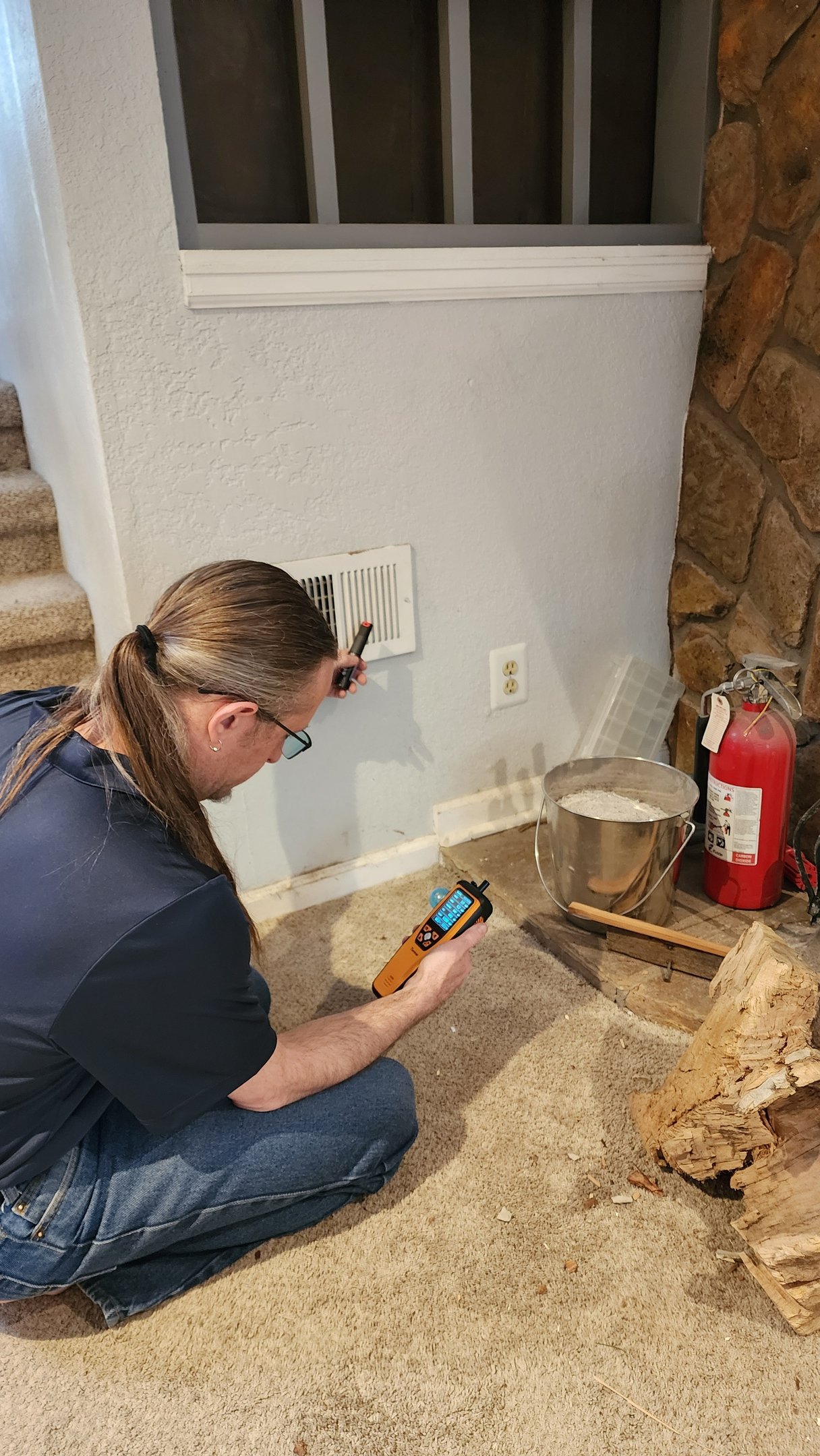
This assessment is for anyone who wants to know what they're breathing every day.
It's especially worth scheduling if:
If anyone in your home has unexplained or persistent allergy-like symptoms — sneezing, itchy eyes, headaches, fatigue — it's worth ruling out indoor air quality as a contributing factor. Getting your air tested is the first piece of that picture.
But honestly — most people who book it just want peace of mind. That's a perfectly good reason.
Your Neighbors. Your Air. Your Comfort.
Family-owned and Arvada-based — we're in these same homes and businesses breathing this same air. That's not a tagline. It's why we do the job right.